
For many working parents in Zimbabwe, the week feels like a race. There are early starts, traffic, work deadlines, school runs, load-shedding schedules, a baby who did not sleep, and a list of errands that never seems to shrink. By Friday, you are exhausted and the weekend disappears into catching up.
You cannot add hours to the day. But you can stop losing them to the same small problems every week. The secret is not working harder; it is deciding things once instead of every day. A simple weekly routine does exactly that.
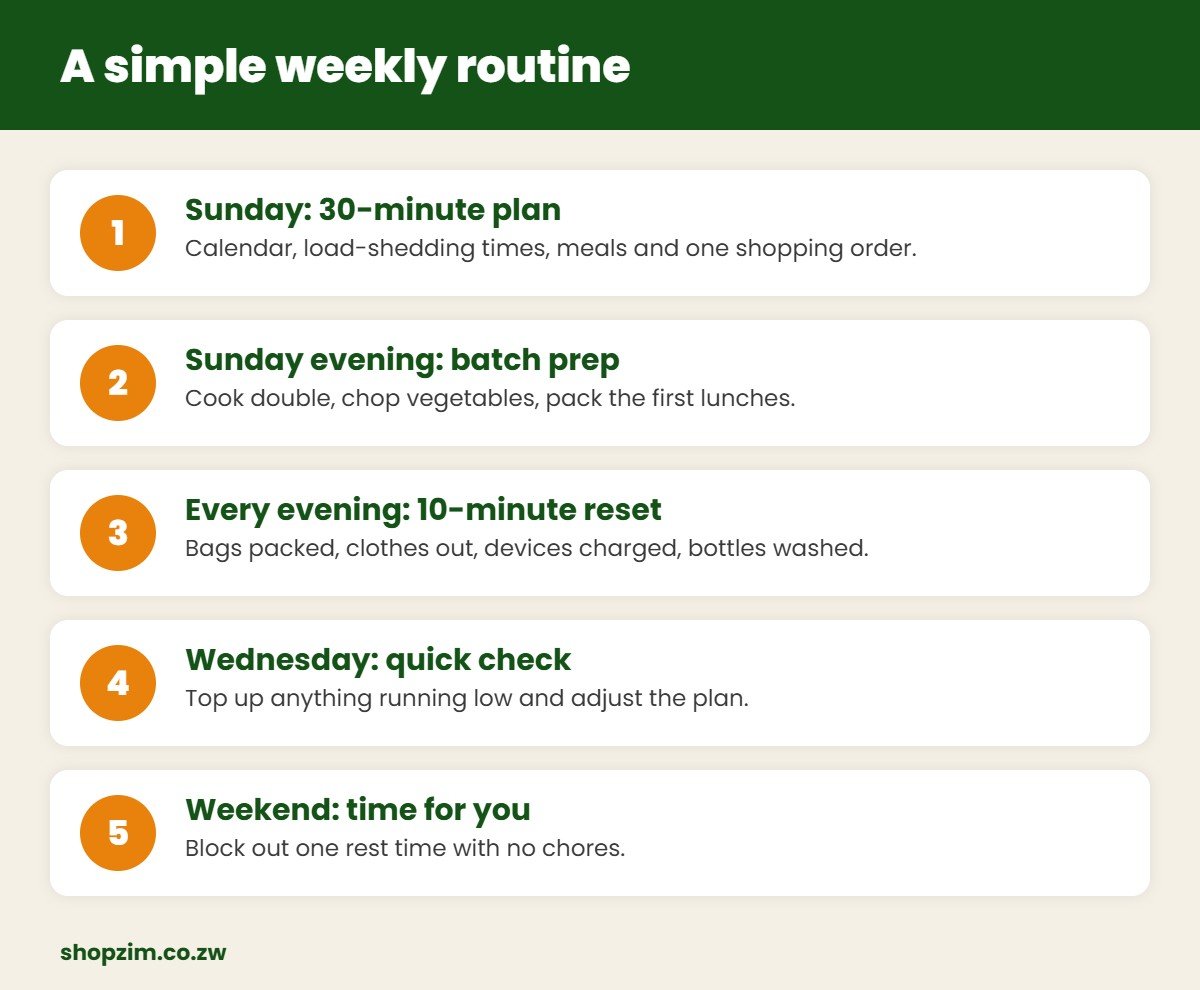
Why routines save so much time
Most daily stress comes from small decisions made in a rush: what to cook, what to pack, whether there is enough of something, where the keys are. Each one takes only a minute, but together they drain your energy. A routine moves those decisions to one calm moment in the week, so the busy days can run on autopilot.
Sunday: the 30-minute plan

Set aside half an hour on Sunday afternoon. With a cup of tea, go through:
- The calendar: work commitments, school events, clinic visits, birthdays and church or family events.
- The load-shedding schedule for your area, so you know which evenings need cooking done early.
- Meals: pick five simple dinners and plan to cook double on two nights.
- The shopping list: check the fridge, pantry and baby supplies, and order what you need in one go. Our restock routine explains how to stop running out.
- Who does what: agree school runs, pickups and chores with your partner, family or helper.
Sunday evening: batch prep
An hour of preparation on Sunday can save several hours during the week:
- Cook a big pot of stew, beans or mince that can stretch over two or three meals.
- Wash and chop vegetables, and store them in sealed containers.
- Boil eggs and prepare snacks for lunch boxes.
- Pack the first two days’ lunches. Salad Cups keep salads crisp by holding the dressing separately. See our meal prep ideas.
Every evening: the 10-minute reset
- Pack bags for tomorrow: school bags, work bag and the nappy bag.
- Lay out clothes for yourself and the children.
- Charge phones, the power bank and the torch.
- Prepare baby feeding items: wash and sterilise bottles, pump parts or milk collectors.
- Do a two-minute tidy so the morning starts clear.
Mornings: keep them simple
With bags packed and clothes ready, mornings become about breakfast and getting out of the door. A few habits help:
- Wake up 15 minutes before the children, if you can.
- Keep breakfast predictable on weekdays: porridge, bread or cereal.
- Keep keys, gate remote and wallet in one fixed spot by the door.
Midweek: the Wednesday check
On Wednesday evening, take five minutes to check how the week is going. Is anything running low? Is there a change to the load-shedding times or a new school notice? Adjust the plan rather than waiting for a crisis on Friday.
Plan your errands instead of reacting
Errands are one of the biggest time drains. Group them into one trip or one order:
- Combine bank, pharmacy and shopping into a single outing near work.
- Order household and baby essentials online for collection or delivery, rather than visiting several shops. Read our guide to buying local online.
- Keep a running list on your phone so nothing is forgotten.
Share the load
A routine works best when it is not carried by one person. Children can do more than we often expect:
- Ages 3 to 5: put toys back in their box, carry their own plate to the sink, choose between two outfits laid out for them.
- Ages 6 to 9: pack their own school bag from a checklist, help set the table, feed pets.
- Ages 10 and up: make simple breakfasts, pack their own lunch from prepared food, help with laundry.
Write the jobs on a simple chart on the fridge. It reduces reminders and gives children a sense of responsibility. If you have a helper, agree a clear weekly list together so expectations are the same on both sides.
Make room for yourself
A routine is not only about getting more done. It should leave space to rest. Block out one evening or a weekend morning that is just for you or your family, with no chores. Many parents find that, once the routine is working, the weekend finally feels like a weekend again.
Be kind to yourself
Some weeks will fall apart. A sick child, a long power cut or a work emergency can undo the best plan. That is normal. The aim is not perfection; it is having a default you can return to. Start with just one part, such as Sunday planning or the evening reset, and add more once it feels natural.
Practical help from ShopZim
ShopZim stocks practical essentials that make busy weeks easier, from lunch containers and baby feeding items to home security. Order once, pay with EcoCash, InnBucks or ZIPIT, and collect in Belgravia or arrange delivery.
