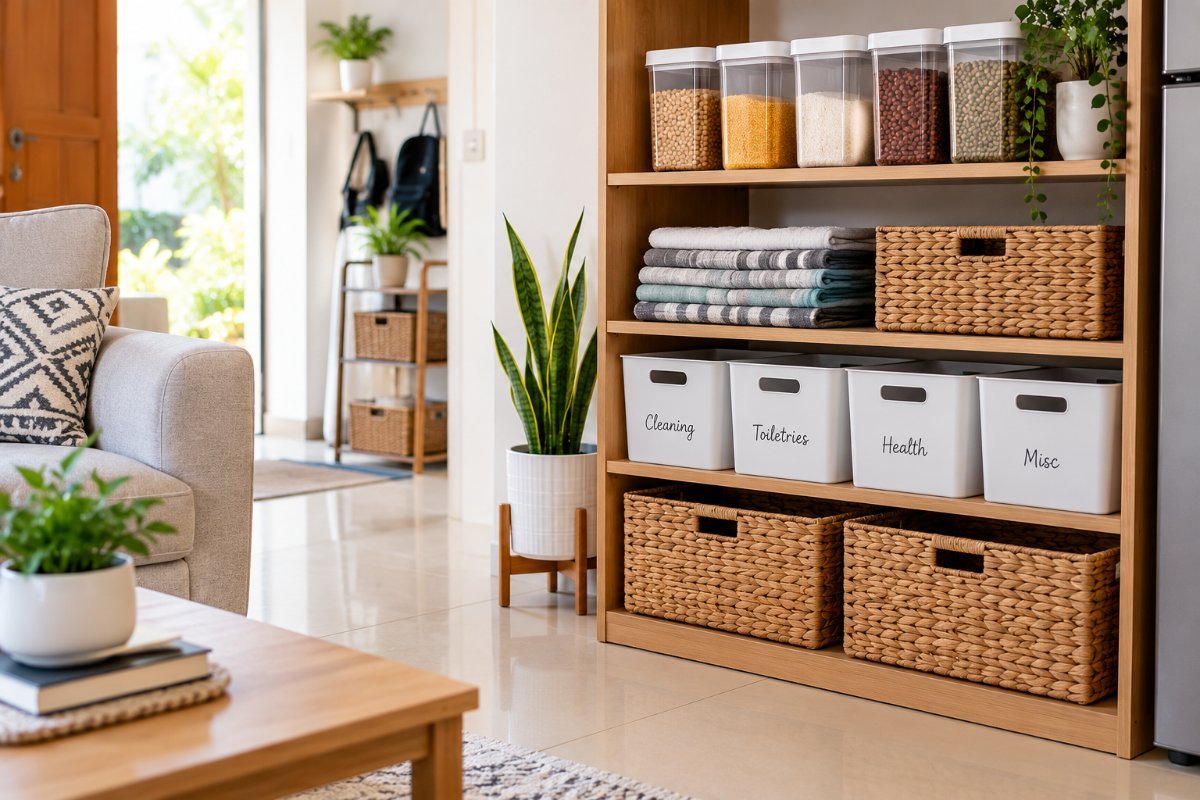
When space is tight and your schedule is full, clutter does not just take up room. It steals time and energy. Searching for a missing bottle teat at 2am, digging through a crowded cupboard for the torch when ZESA goes off, or untangling chargers before you rush out of the door turns ordinary moments into small daily stresses.
Getting organised does not need a home makeover, new cupboards or a weekend of sorting. A few small, realistic habits keep everyday essentials easy to reach and simple to put back, whether you live in a flat in town, a cottage, or a busy family house.
Why clutter builds up so quickly
- Things have no fixed home, so they get put down wherever there is space.
- Daily items and backups are mixed together, so counters and shelves fill up with things you are not using today.
- Containers hide what is inside, so we buy duplicates of things we already own.
- Tidying is saved for the weekend, and by then the pile is too big to face.
Each of the habits below tackles one of these causes.
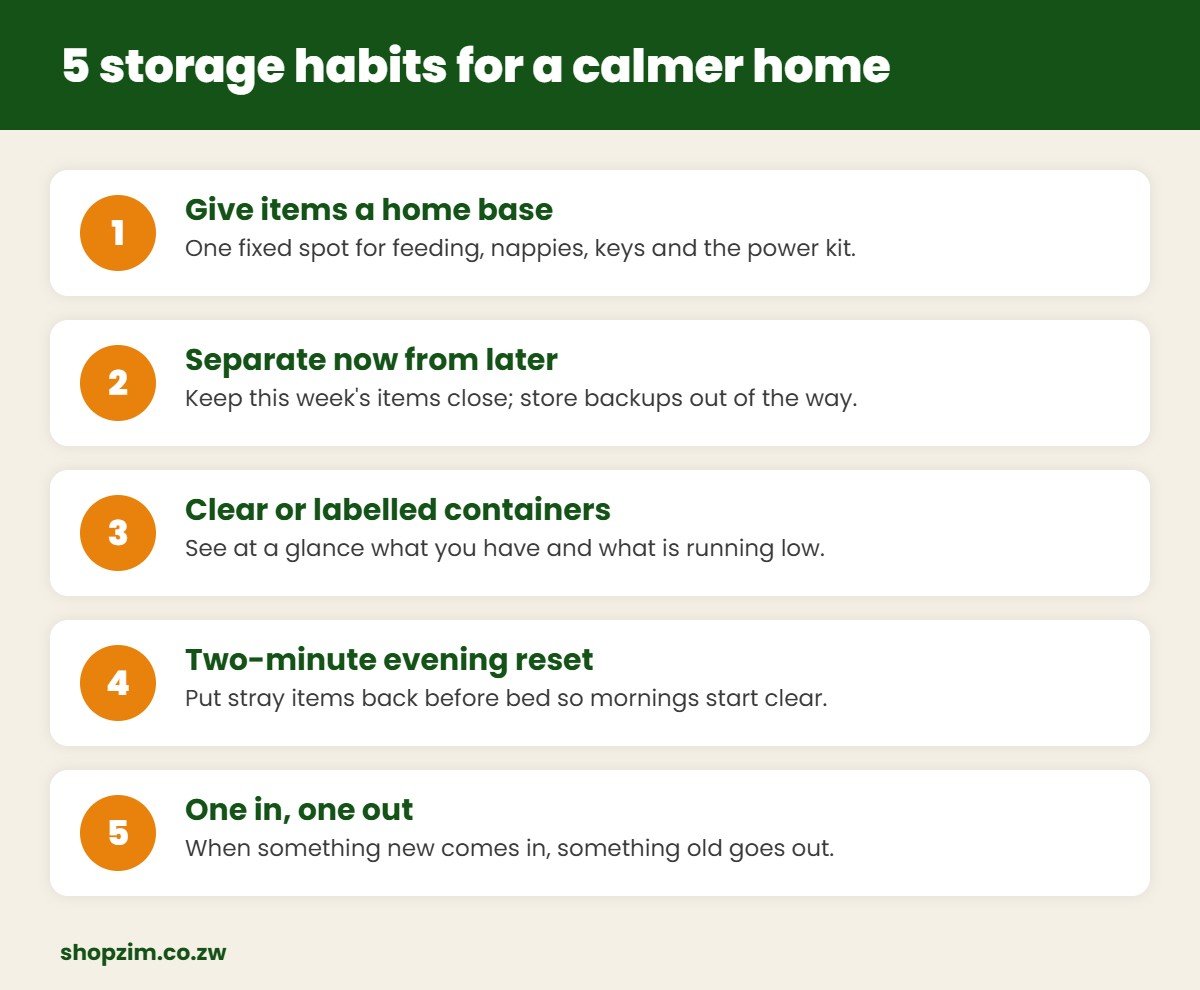
Habit 1: Give every high-use item a home base
Pick one dedicated spot for each group of things you use every day, and always return them there. For example:
- Feeding station: bottles, teats, milk collectors, bibs and burp cloths in one basket or drawer near where you feed.
- Nappy station: nappies, wipes, cream and a change of clothes in one caddy you can carry from room to room.
- Load-shedding kit: torch, candles, matches, power bank and spare batteries in one box everyone knows.
- Out-the-door spot: keys, wallet, masks, gate remote and sunglasses in a bowl or on hooks by the door.
When everything has a clear home, resetting a room takes seconds, and anyone in the house, including a helper or a visiting relative, can find things without asking.
Habit 2: Separate “now” from “later”
Keep only what you use this week within easy reach. Move backups, extra packs, the next clothing size and seasonal items into a separate “later” zone, such as a top shelf, under the bed or a storeroom.
This one change makes counters and shelves feel noticeably calmer, and it pairs well with a restock routine: when you take something from “later” to “now”, that is your signal to reorder. Our guide to a calm restock routine explains how.
Habit 3: Use clear or clearly labelled containers
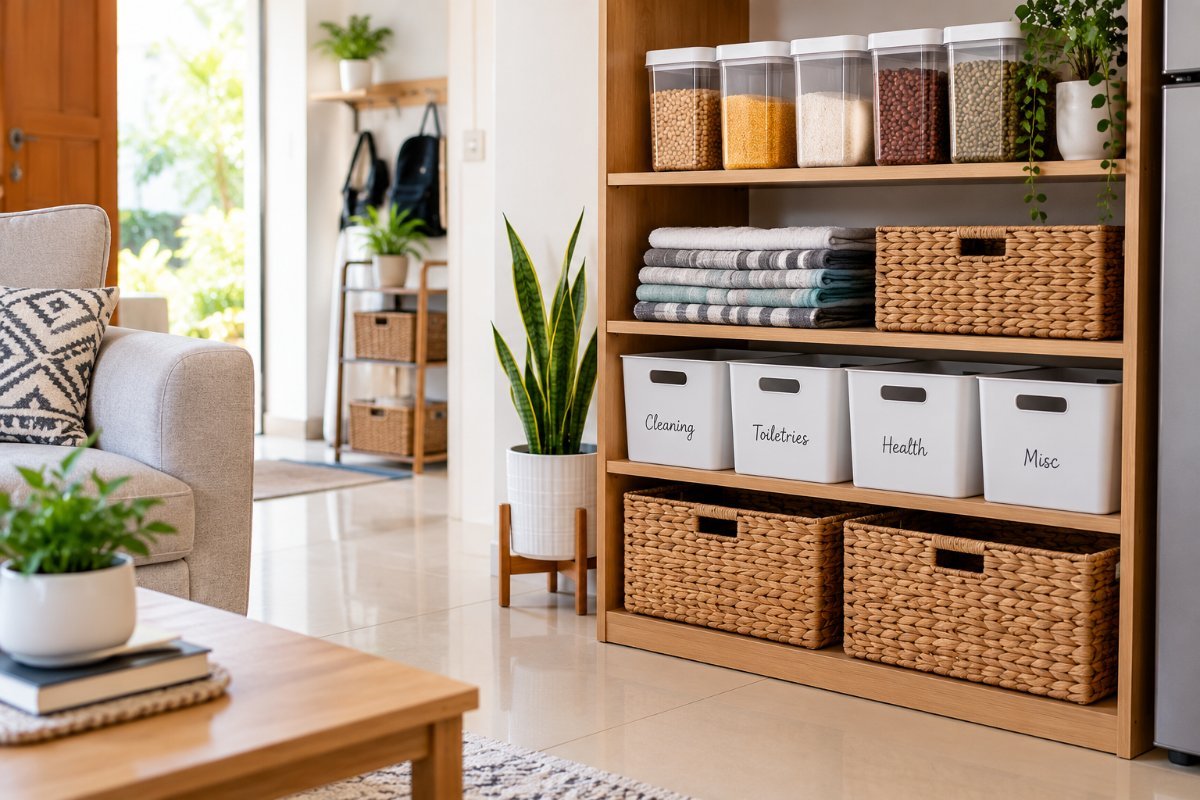
Group similar items together by routine, size or category, and store them where you can see them. Clear containers show you at a glance what you have and what is running low. If your containers are not see-through, a simple label on masking tape works just as well.
Good candidates for containers:
- Baby clothes sorted by size, so outgrown items can be packed away or passed on.
- Medicines and first aid, kept high and out of children’s reach.
- Chargers and cables, each in its own pouch or small box.
- Kitchen snacks and lunch-box items, so packing lunches takes minutes. Stackable Salad Cups double up as neat fridge storage for cut fruit and sides.
Habit 4: Do a two-minute evening reset
Instead of saving all the tidying for a big weekend catch-up, spend two minutes each evening putting stray items back in their home bases. Set a timer if it helps. Children can join in with their toys and school bags.
Two minutes does not sound like much, but it stops clutter from snowballing through the week, and it means every morning starts with a clear counter.
Habit 5: One in, one out
When something new comes into the house, something old goes out. A new pair of shoes means an old pair is donated. New baby clothes in the next size mean the smallest size is packed away for a sibling, a friend or a church donation. This keeps storage from overflowing without needing big clear-outs.
Storage ideas for small spaces
- Go vertical: wall hooks, over-the-door organisers and shelves above eye level use space that is usually wasted.
- Use the space under the bed for “later” items in flat boxes or bags.
- Choose items that do two jobs, such as a storage ottoman or a baby bag that doubles as a nappy station.
- Buy fewer, better things. One good set of containers beats a cupboard of mismatched lids. Our guide to buying essentials that last can help you decide what is worth keeping.
Organising for a new baby
A new baby brings a surprising amount of gear. A few tips from mums who have been there:
- Set up the feeding and nappy stations before the birth, alongside packing your hospital bag.
- Do not unpack every gift at once. Keep bigger sizes in the “later” zone.
- Keep feeding items like milk collectors and bottles together with their cleaning brush, so washing and sterilising is quick.
Start small
You do not need to do all of this at once. Pick one area that causes the most stress, whether that is the feeding corner, the kitchen counter or the spot by the door, and set up one home base this week. Once it works, move on to the next.
Explore practical home and family essentials at ShopZim. Pay with EcoCash, InnBucks or ZIPIT, and collect from our Belgravia pickup point or arrange delivery.
