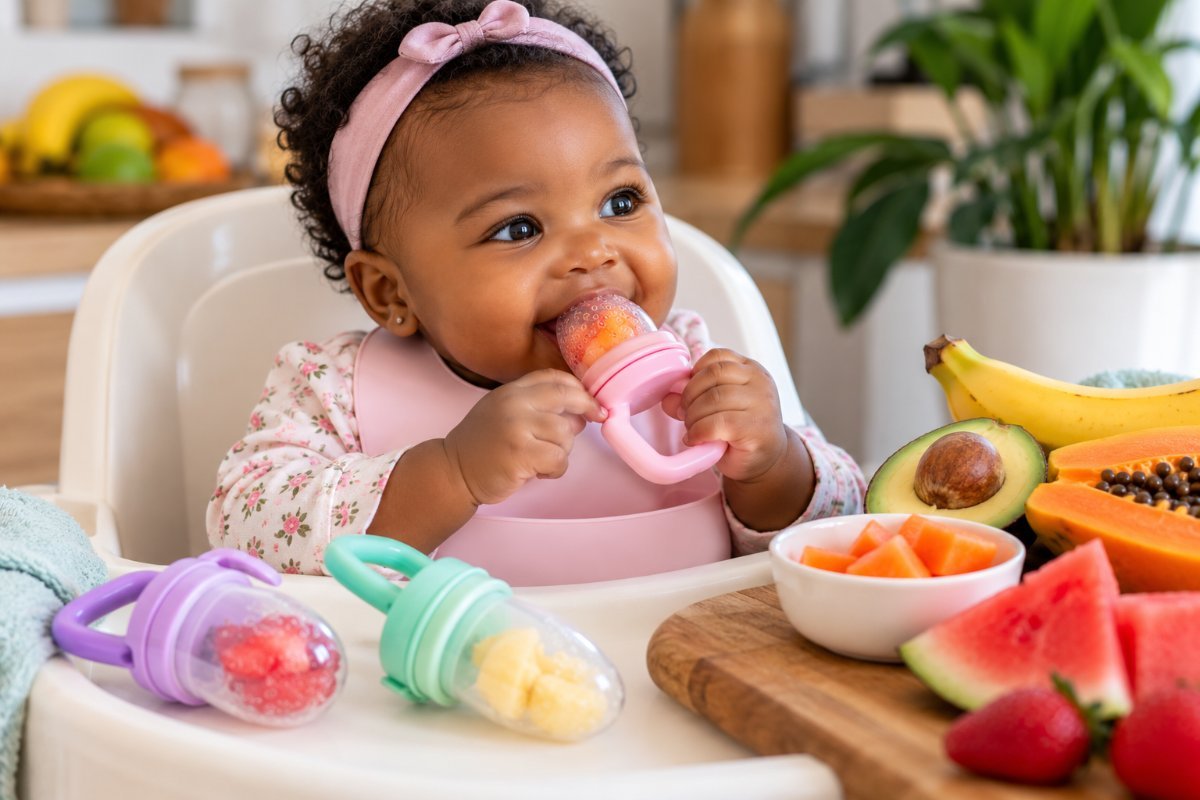
When your baby starts showing signs of readiness for solids — reaching for your food, holding their head steady and showing an ability to swallow food — it's one of the most exciting milestones of early parenthood. A fruit pacifier, also called a fresh food feeder or mesh feeder, is a creative way to introduce your little one to the flavours of fresh fruit and other suitable foods.
You simply place a small amount of appropriately prepared fruit into the mesh or silicone pouch, secure it and let your baby explore the taste and texture. It's a fun way for little ones to discover new flavours while practising their grip and hand-to-mouth coordination.
Before you buy one, though, there are a few important things to consider — especially here in Zimbabwe, where product quality, availability and our local fruit choices all play a role.
Whether you're shopping for your own baby or looking for a thoughtful gift for a new mum, here's what to look for when choosing a fruit pacifier.
1. Material Safety: Silicone vs. Mesh
The feeding pouch is one of the most important parts of any fruit pacifier. You'll generally find two options: silicone pouches and fine mesh pouches.
Silicone feeders are often easier to clean thoroughly and may be more durable with regular use. Mesh feeders are flexible and allow babies to suck and gnaw on the fruit through the fabric.
Both options have advantages, so consider your preferences and how much time you want to spend cleaning the feeder after each use.
When shopping, look for materials specifically described as food-grade and check the product information for confirmation that they are BPA-free where applicable. Choose a product from a seller that provides clear details about its materials and safe use.
2. Handle Design and Baby's Grip
Babies are still developing their fine motor skills when they begin eating solids, so a comfortable handle can make the feeding experience easier.
Look for a wide, textured, ring-shaped or T-bar handle that is easy for small hands to grasp. A lightweight design can help your baby practise holding the feeder and bringing it towards their mouth.
Some models feature colourful handles that make them visually appealing, while others have ergonomic shapes designed for a comfortable grip.
Check that the handle is securely attached, has no sharp edges and does not contain loose parts. Choose a design that is appropriate for your baby's developmental stage.
3. Pouch Size and Hole Diameter
The size of the mesh or silicone openings affects how easily your baby can access the fruit inside the feeder.
Look for a pouch that holds a suitable amount of fruit without being too bulky for your baby to manage. The openings should allow soft fruit pulp to pass through while retaining larger pieces.
Some fruit pacifiers come with interchangeable pouches in different sizes, offering flexibility as your baby grows and explores new foods.
When comparing products, check the recommended age range and the manufacturer's guidance on pouch sizes. Remember that the feeder should always be used as directed and does not eliminate choking risks.
4. Ease of Cleaning
A fruit pacifier needs to be cleaned thoroughly after every use. Fruit pulp can become trapped in small openings, so choosing a design that is easy to dismantle and wash can make everyday feeding much more convenient.
Look for a feeder that comes apart easily, allowing you to clean the pouch, handle and connecting parts separately.
Silicone components may be dishwasher-safe or suitable for sterilisation, depending on the product. Mesh feeders may require more careful washing to remove all traces of fruit.
Always follow the manufacturer's cleaning instructions. Do not boil or sterilise a feeder unless the manufacturer confirms that it is safe to do so.
5. Safe Locking Mechanism
The connection between the handle and the pouch should be strong and secure.
Look for a reliable screw-lock or click-lock mechanism that keeps the pouch firmly attached during use. A well-designed closure helps prevent the feeder from opening accidentally.
Before every feeding session, check that the feeder is properly closed and that no parts are loose, cracked or damaged. Follow the manufacturer's instructions for checking the closure, and never give your baby a feeder with a faulty locking mechanism.
This is an important feature to consider when comparing different models, particularly when shopping online and you cannot inspect the product in person.
6. Suitability for Local Fruits
One of the best things about introducing fresh fruit is that Zimbabwean parents have access to a variety of delicious options, many of which are available at local markets.
When choosing your fruit pacifier, consider whether its pouch is suitable for soft, ripe fruits such as:
- Bananas: Soft, naturally sweet and easy to prepare.
- Pawpaw: A juicy fruit with a soft texture when ripe.
- Avocado: Creamy and rich in healthy unsaturated fats.
- Mangoes: A flavourful seasonal favourite when fully ripe.
- Watermelon: Refreshing and easy to prepare when the rind and seeds are removed.
These fruits offer different flavours and textures for your baby to explore.
Choose a feeder that is easy to fill with soft fruit and simple to clean afterwards. Always prepare food appropriately for your baby's age. Hard fruits, pits, seeds and tough skins can present risks, and a fruit feeder does not make otherwise unsuitable foods safe.
Remember that fruit is only one part of a balanced complementary diet. From around six months, babies also need iron-rich foods and a variety of other age-appropriate foods alongside breast milk or infant formula.
7. Comfort and Convenience for Everyday Feeding
A well-designed fruit pacifier can make exploring new flavours an enjoyable experience for both you and your baby.
Its easy-to-hold handle gives your little one an opportunity to practise gripping and hand-to-mouth coordination while discovering different tastes.
Look for a lightweight design that is comfortable for small hands and convenient to carry in your baby bag when visiting family, travelling or spending time outdoors.
A compact feeder with a protective cover can also help keep the pouch clean while you're on the move. Just make sure the cover is removed before use and stored safely away from your baby.
Always use the feeder while your baby is awake, seated upright and under close adult supervision.
8. Durability and Value for Money
When shopping in Zimbabwe, it's worth considering the quality and durability of the product before making a purchase.
Look for sturdy materials, a secure closure and a pouch designed to withstand regular cleaning. Some models include replacement pouches or different sizes, which can offer added convenience.
Before buying, compare:
- The quality of the materials.
- Whether replacement parts are available.
- How easily the product can be cleaned.
- Whether it comes with a protective cover.
- The manufacturer's recommended age and usage instructions.
- The seller's return or exchange policy.
A product with useful features and straightforward maintenance can be a practical addition to your baby's feeding accessories.
9. Hygiene and Everyday Maintenance
Keeping your baby's fruit pacifier clean is essential, especially when using fresh fruit in Zimbabwe's warm weather.
Follow these simple practices:
- Wash the feeder before its first use and after every feeding.
- Disassemble removable parts according to the manufacturer's instructions.
- Wash thoroughly with clean water and suitable dishwashing detergent.
- Rinse well and allow all components to dry completely.
- Inspect the pouch and handle for damage before each use.
- Discard leftover fruit after feeding rather than saving it for another session.
Do not leave fruit inside the feeder for extended periods, and never store a feeder with leftover food in your baby bag.
Proper cleaning helps keep the feeder fresh and ready for your baby's next feeding session.
10. Age Suitability and Ease of Use
Before purchasing a fruit pacifier, check the manufacturer's recommended age and instructions.
Most babies are ready to begin complementary feeding at around six months, when they can hold their head steady, sit upright with support, coordinate their hands and mouth, and swallow food.
Although some feeders are marketed for younger babies, this does not mean they should be used before your baby is developmentally ready for solids.
Choose a feeder that is simple to open, fill, close and clean. A straightforward design can save time during busy feeding routines and make the product easier for parents and other caregivers to use correctly.
If your baby has difficulties with feeding or swallowing, speak to a healthcare professional before introducing a fruit feeder.
Where to Buy a Fruit Pacifier in Zimbabwe
Looking for convenient baby-feeding accessories? Online shopping makes it easier to explore available options from the comfort of your home.
Visit ShopZim to browse baby products and check whether fruit pacifiers or fresh food feeders are currently available.
Before placing your order, review the product description, material information, recommended age, cleaning instructions and closure design. If any important safety information is missing, ask the seller for clarification.
Shopping online can be especially convenient for busy parents who want to compare products without visiting several shops.
Frequently Asked Questions
What is a fruit pacifier used for?
A fruit pacifier is a feeding accessory that holds small pieces of suitable food inside a mesh or silicone pouch. It allows babies to explore flavours and textures by sucking and gnawing on the pouch.
At what age can a baby use a fruit pacifier?
Most babies begin complementary feeding at around six months, when they show the necessary developmental signs. Follow the manufacturer's age guidance and consult a healthcare professional if you are unsure whether your baby is ready.
Is a silicone fruit feeder better than a mesh feeder?
Silicone feeders are often easier to clean, while mesh feeders are flexible and soft. The best option depends on the product's construction, cleaning requirements and your preferences. Both need to be cleaned thoroughly and checked for damage.
Which fruits can I put in a fruit pacifier?
Soft, ripe fruits such as banana, pawpaw, avocado and mango are possible options. Wash and prepare the fruit appropriately, remove pits and seeds, and follow the feeder manufacturer's instructions.
Can a fruit pacifier prevent choking?
No. A fruit feeder does not eliminate choking risks. Always supervise your baby closely, keep them seated upright and use only foods appropriate for their developmental stage.
How do I clean a fruit pacifier?
Follow the manufacturer's instructions. Wash the feeder after every use, dismantle removable components where possible, clean away all fruit residue, rinse thoroughly and allow the parts to dry completely.
Final Thoughts: Choose the Right Fruit Pacifier for Your Little One
Introducing new flavours is an exciting part of your baby's development. A fruit pacifier can offer a creative and engaging way for your little one to explore the taste of fresh fruit while practising their grip and hand-to-mouth coordination.
When choosing one, prioritise food-safe materials, a comfortable handle, a suitable pouch, easy cleaning and a secure closure. Consider the fruits you are likely to use, the product's durability and how convenient it will be during everyday feeding.
For parents in Zimbabwe, locally available fruits such as bananas, pawpaw, avocado and mango provide plenty of opportunities to introduce new flavours when babies are ready for complementary feeding.
Remember that a fruit feeder is an optional accessory, not a replacement for a varied diet or close supervision. Start solids at around six months, introduce a variety of nutritious foods and allow your baby to explore at their own pace.
Ready to explore baby-feeding accessories? Visit ShopZim to discover products for your growing family.