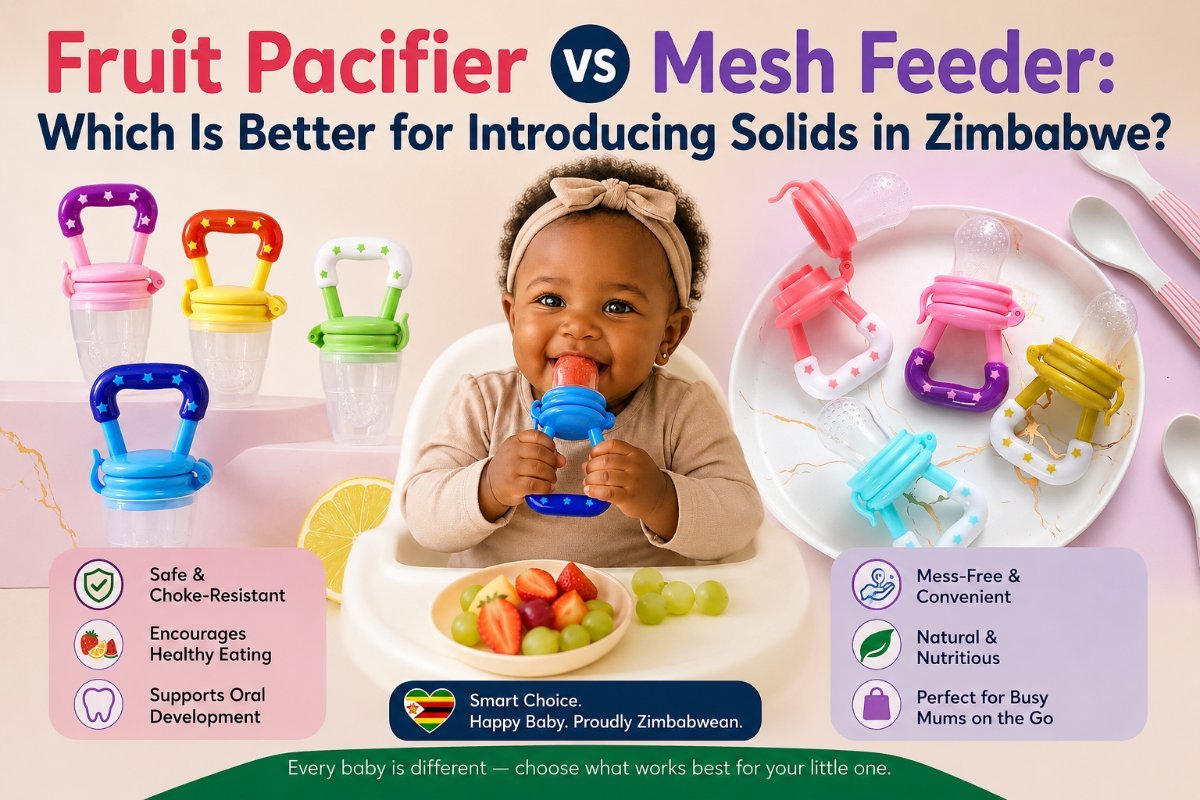
Two Feeders, One Goal
When your baby is ready to start solids, you will quickly come across two similar-looking tools: the silicone fruit pacifier and the mesh feeder. Both let your baby taste real food while holding back larger pieces. Both have a handle, and both are cheap. So which one should you buy?
The honest answer is that they suit slightly different babies and different families. This guide compares them side by side so you can choose with confidence — or decide whether it is worth having both.
What Is a Silicone Fruit Pacifier?
A fruit pacifier has a soft, food-grade silicone pouch with small holes. You load soft fruit or cooked vegetables inside, clip it closed, and your baby sucks and chews to get the juice and pulp out. The silicone feels similar to a dummy or bottle teat, which many babies find familiar.
What Is a Mesh Feeder?
A mesh feeder looks similar, but the pouch is made of a fine fabric or nylon net instead of silicone. Because the net is more open, more food comes through with each chew, and babies can manage slightly firmer foods such as soft-cooked vegetable chunks or frozen fruit pieces.
Side-by-Side Comparison
Cleaning
Fruit pacifier: Much easier. Silicone rinses clean, can be boiled or sterilised with tablets, and doesn't hold stains for long if you wash it straight away.
Mesh feeder: Harder. Fruit fibres get trapped in the net, and it can stain or develop smells, especially with banana or avocado. Many parents end up replacing the mesh bags regularly.
Winner: Fruit pacifier.
Types of food
Fruit pacifier: Best for very soft, juicy foods — ripe banana, mango, pawpaw, watermelon, avocado and well-steamed butternut or sweet potato.
Mesh feeder: Handles a wider range, including slightly firmer foods and frozen fruit chunks, because more pulp passes through the net.
Winner: Mesh feeder, for variety.
How much food baby actually gets
Fruit pacifier: Smaller amounts — mostly juice and fine pulp. Great for first tastes, less filling.
Mesh feeder: More food comes through, so it feels closer to "real eating" for older babies.
Winner: Depends on age — fruit pacifier for beginners, mesh feeder for babies a few weeks into solids.
Teething relief
Both work well with frozen fruit. The silicone pouch is smoother on sore gums, while the mesh gives a little more texture to chew against. Many babies enjoy either.
Winner: A draw.
Durability
Fruit pacifier: Silicone lasts well, but once teeth arrive babies can bite through it. Check for tears before each use.
Mesh feeder: Mesh can fray or tear and usually needs replacing more often.
Winner: Fruit pacifier.
Mess
Both reduce mess compared to spoon-feeding. Because more pulp comes through, the mesh feeder tends to be a little messier.
Winner: Fruit pacifier.
Price and availability in Zimbabwe
Both are inexpensive. The fruit pacifier is available on ShopZim for $3 and comes in a design that is easy to clean and reuse. Mesh feeders are sold in some pharmacies and baby shops, but replacement mesh bags can be harder to find locally.
Which One Should You Choose?
Choose a fruit pacifier if:
- Your baby is just starting solids (around 6 months) and you want the gentlest introduction to texture.
- You want something quick and easy to clean between uses.
- You live somewhere hot, where food left in a mesh net can spoil and smell quickly.
- Your baby already likes dummies or bottle teats.
Choose a mesh feeder if:
- Your baby has been on solids for a few weeks and wants more food per bite.
- You want to offer firmer foods such as soft vegetable chunks.
- You don't mind extra cleaning or replacing mesh bags.
Or use both
Many parents start with a fruit pacifier for the first weeks, then add a mesh feeder or move to soft finger foods as their baby gets more confident. Since both are cheap, having one of each gives you flexibility.
Safety Tips for Both Feeders
- Always supervise your baby while they use any feeder.
- Inspect the pouch or mesh before every use and replace it if it is torn.
- Remove seeds, pips, stones and tough skins.
- Don't give honey to babies under 12 months, and avoid added sugar and salt.
- Wash and sterilise after each use, and let it dry completely.
Good Starter Foods to Try
- Ripe banana or avocado
- Very ripe mango or pawpaw, peeled
- Watermelon with seeds removed
- Steamed butternut, sweet potato or carrot
- Frozen banana or mango chunks for teething
The Bottom Line
For most Zimbabwean parents starting out, the silicone fruit pacifier is the better first buy: it is easier to clean, lasts longer and is gentle for beginners. The mesh feeder earns its place a little later, once your baby is ready for more food per bite.
Ready to start? Order the Fruit Pacifier on ShopZim, then read our guide on how to use a fruit pacifier to introduce solids.
This article is for general information only. Ask your clinic or paediatrician about when to start solids for your baby.
