
Across Zimbabwe, small businesses are moving online. Vendors who once relied only on a market stall, a shop front or word of mouth are now taking orders on WhatsApp, Facebook and their own websites. Customers are ready for it: they want to browse from their phones, see prices before they travel, and have items collected or delivered on their schedule.
But selling online is not just posting a photo and waiting. The businesses that do well online get a few basics right. This guide walks through them, based on what works for local sellers.
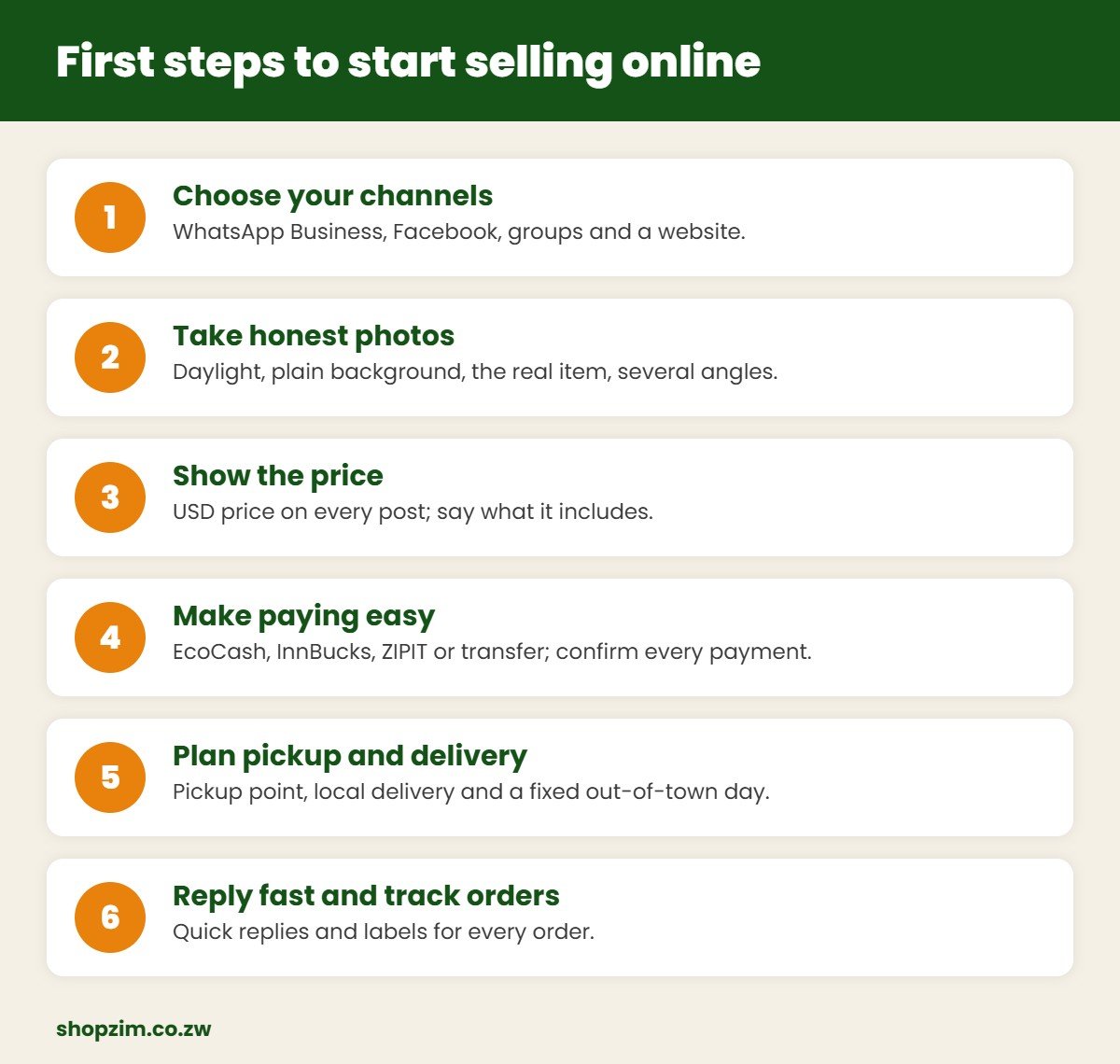
1. Choose where you will sell
Most small businesses start with one or more of these:
- WhatsApp Business: free, familiar to customers, with a catalogue, labels and quick replies. Ideal for repeat customers.
- Facebook page and Marketplace: good for reaching new buyers in your area, and you can run paid adverts to specific suburbs or towns.
- Buy-and-sell groups: useful for extra reach, but post with care and follow each group’s rules so you are not flagged as spam.
- A website or online shop: builds trust, shows up on Google, and lets customers order without waiting for a reply.
You do not need all of them at once. Start where your customers already are, then add a website when you are ready to look more established.
2. Take honest, clear product photos

Photos sell. They also prevent disputes. Good product photos are:
- Taken in natural daylight, against a plain background.
- Of the actual item you are selling, not a picture copied from an overseas website.
- Shot from several angles, with one photo showing size (in a hand, or next to a common object).
- Free of heavy filters that change the colour.
Customers in Zimbabwe are rightly cautious about online sellers. A photo that clearly shows the real product does a lot to build trust.
3. Show the price
“Inbox for price” costs you sales. Many buyers will simply move on rather than message and wait. Show the price in USD on every post and listing, and be clear about what it includes: one item or a set, with or without a case, delivery included or not.
When setting your price, include all your real costs: buying price, transport and import costs, payment charges, packaging and your time. If you import, remember that card fees and checkout charges can add noticeably to the cost of every item.
4. Make paying easy
Offer the payment methods your customers already use, such as EcoCash, InnBucks, bank transfer or ZIPIT, and cash on collection if you are comfortable with it. Send your payment details in a saved message so they are always correct, and confirm every payment as soon as it arrives.
As you grow, an online payment gateway lets customers pay directly on your website and gives you automatic records.
5. Plan collection and delivery
Decide your options before you start advertising:
- Pickup point: a fixed address with clear hours. Share a location pin.
- Local delivery: using ride-hailing drivers or a regular runner. State whether the customer pays the driver.
- Out-of-town: choose a reliable courier or bus service and a fixed dispatch day each week.
Write these options into your product posts and your WhatsApp greeting, so customers do not have to ask.
6. Answer quickly, and keep track
Online buyers often message several sellers at once. The first clear reply usually wins the sale. Use WhatsApp Business quick replies for common questions (price, sizes, delivery, payment), and labels such as “New order”, “Paid” and “Collected” to see where every order stands.
Follow up politely with people who asked but did not buy. A friendly message a few days later often turns a question into a sale.
7. Build trust over time
- Share customer feedback (with permission) and photos of orders being packed.
- Post regularly, even if it is one simple update a day.
- Write helpful content, such as how-to guides and buying tips, so customers see you as an expert. Our own guides, like how to use milk collectors, are an example.
- Handle problems openly. A seller who sorts out a mistake quickly earns more loyalty than one who never makes one.
8. Know your numbers
Keep a simple record of what you bought, what it cost to land, what you sold it for and what you spent on adverts. A basic spreadsheet is enough. It tells you which products are worth restocking, which adverts work, and whether the business is really making a profit.
9. Spend on adverts carefully
Paid Facebook and Instagram adverts can bring in new customers quickly, but they can also burn money. Start with a small daily budget, target the suburbs or towns you can actually deliver to, and put the price and how to order in the advert itself so only serious buyers respond. Judge an advert by how many orders it brings, not by likes or clicks, and stop the ones that do not convert.
Common mistakes to avoid
- Hiding prices or changing them depending on who asks.
- Using photos that are not of your actual stock.
- Promising delivery times you cannot meet.
- Posting the same advert in dozens of groups at once, which can get your account restricted.
- Forgetting to reply to messages over the weekend.
Shopping as well as selling
Good online sellers think like good online buyers. If you want to see what customers look for, read our guide to buying local online without losing trust, and browse ShopZim to see how clear prices, real photos and simple pickup and delivery options work in practice.