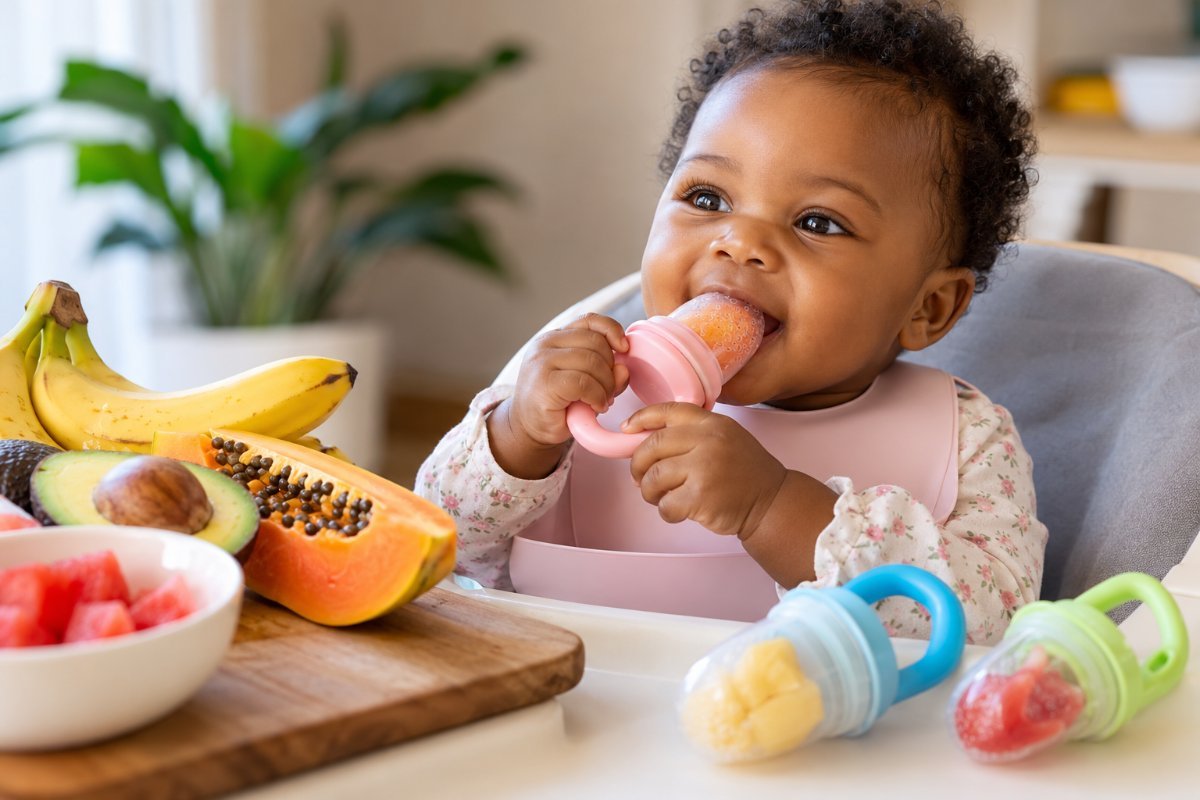
Is Your Baby Ready for Solids? Here's the Safest Way to Start
Your baby has been eyeing your plate, reaching for your food, and those little cheeks are looking extra ready for something new. Introducing solids is one of the most exciting milestones in your baby's first year — but it can also feel nerve-wracking. What if they choke? What if they hate the texture? What if mealtimes become a battle?
If you're a new mum in Zimbabwe navigating this stage, a fruit pacifier (also called a fresh food feeder) may seem like a convenient way to introduce new flavours. It allows your baby to explore certain soft foods through a mesh or silicone pouch attached to a handle.
However, it's important to know that a fruit feeder does not eliminate choking risks or replace traditional complementary feeding. Think of it as an optional feeding accessory rather than a requirement for starting solids.
Here is how to use one more safely.
What You Will Need
- A fruit pacifier or fresh food feeder, available on ShopZim.
- Fresh, ripe fruit such as banana, papaya or avocado.
- A clean cutting board and knife.
- Clean water for washing the fruit and feeder.
- A bib — trust the process, it will get messy!
Step-by-Step Guide to Using a Fruit Pacifier
1. Make Sure Your Baby Is Ready for Solids
Most babies are ready to start complementary foods at around six months. Look for signs that your baby can hold their head steady, sit upright with support, coordinate their eyes, hands and mouth, and swallow food rather than automatically pushing it out with their tongue.
Introducing solids before four months is not recommended. If your baby was born prematurely or has difficulties with feeding or swallowing, consult a healthcare professional about the right time to begin.
2. Choose the Right Fruit
Start with ripe, soft fruits that are easy to mash. In Zimbabwe, you have several excellent options at your local market:
- Ripe banana: Soft, easy to mash and naturally sweet.
- Papaya: Ripe pawpaw has a soft texture and provides vitamins.
- Avocado: Creamy and contains beneficial unsaturated fats.
- Ripe mango: Soft, juicy and full of flavour.
- Watermelon: Can be offered in an age-appropriate form, with the seeds and rind removed.
Wash the fruit thoroughly and remove seeds, stones, rind and any hard parts before preparing it.
Avoid putting hard, raw apple or other hard fruit pieces into the feeder. A feeder does not make every food safe, and small pieces can still detach.
3. Clean the Fruit Feeder Thoroughly
Before the first use, wash the feeder according to the manufacturer's instructions. Pay special attention to the pouch, holes, joints and any areas where food can become trapped.
Use clean water and suitable washing detergent, then rinse thoroughly. Check whether the product is dishwasher-safe rather than assuming that it is.
Inspect the feeder before each use. Do not use it if the mesh is torn, the silicone is damaged, or any part is loose.
4. Prepare and Load the Fruit
Cut the washed fruit into pieces that fit comfortably inside the pouch, following the manufacturer's instructions.
Open the feeder, add a small amount of fruit and secure the closure firmly. Check that it locks correctly and that no part is damaged.
Never overfill the pouch. Food residue can collect inside it, so clean the feeder promptly after every use.
5. Let Your Baby Explore at Their Own Pace
Offer the feeder while your baby is awake, alert and seated upright in a high chair or another suitable feeding seat.
Let your baby hold the handle if they are able to do so. They may suck, gnaw, taste the fruit or simply play with it at first. All of these can be part of learning about food.
Some babies take to a new taste immediately, while others need several opportunities before accepting it. Avoid forcing your baby to eat or turning the experience into a battle.
Important: Stay within arm's reach and supervise your baby continuously. Never leave a baby alone with a fruit feeder, even for a moment.
6. Introduce Other Foods Too
A fruit feeder should not be your baby's only way of experiencing solid foods. Around six months, babies need a variety of complementary foods alongside breast milk or infant formula.
Offer age-appropriate, soft foods directly on a spoon or in safe shapes that your baby can manage. Include iron-rich foods such as well-cooked, finely mashed beans, lentils, meat or iron-fortified infant cereal, as appropriate.
Fruit is a lovely way to explore new flavours, but fruit alone does not provide all the nutrients your growing baby needs.
7. Clean Up and Store the Feeder Safely
Once your baby has finished, remove any leftover food immediately. Disassemble the feeder if the instructions allow it, and wash all its parts thoroughly.
Allow the parts to dry completely before storing them in a clean, dry place. Do not save fruit that has been sucked on for another feeding, as saliva can introduce bacteria.
Safety Tips Every Parent Should Know
A fruit feeder can be convenient, but it is not a guaranteed choking-prevention device. Follow these essential precautions:
- Always supervise: Stay close enough to intervene immediately.
- Keep your baby upright: Do not offer food while your baby is lying down, crawling or moving around.
- Choose suitable foods: Remove pits, seeds, rind and hard pieces. Avoid foods that are inappropriate for your baby's developmental stage.
- Check the product: Make sure the feeder is intact and its parts cannot easily come loose.
- Watch for allergies: Introduce new foods in small amounts and watch for reactions. Introduce common allergens, such as well-cooked egg and smooth peanut butter thinned into an age-appropriate food, in safe forms rather than relying on a feeder.
- Know the difference between gagging and choking: Gagging can be noisy and is a common part of learning to eat. Choking may be silent, with difficulty breathing, coughing or making sounds. Learn infant choking first aid and seek emergency assistance if your baby cannot breathe.
- Avoid honey before 12 months: Honey can cause infant botulism. Also avoid added salt and sugar.
If your baby develops difficulty breathing, swelling of the tongue or throat, or other signs of a severe allergic reaction, seek emergency medical help immediately.
What If Your Baby Doesn't Like the Fruit?
Don't worry! Babies have different preferences, and learning to eat takes time.
If your baby turns away, closes their mouth or becomes upset, take a break and try again another day. You can offer the same fruit in a different safe texture or alongside another familiar food.
Keep mealtimes relaxed and let your baby respond to their hunger and fullness cues. The aim is to build a positive relationship with food, not to get your baby to finish a particular portion.
Do You Really Need a Fruit Pacifier?
Not necessarily. A fruit feeder is an optional accessory that some parents find useful for supervised exploration of certain foods. It is not essential for introducing solids, and it does not replace learning to eat soft foods from a spoon or appropriately prepared finger foods.
If you decide to buy one, choose a well-made product with secure closures, age-appropriate instructions and easy-to-clean parts. Always follow the manufacturer's guidance.
Ready to Start Your Baby's Feeding Journey?
Introducing solids is a journey of discovery for both you and your little one. Start at the right developmental stage, offer a variety of nutritious foods, keep your baby safely seated and supervised, and give them time to learn.
If you would like to explore feeding accessories for your baby, visit ShopZim to see what is available.
A final reminder for every new mum: Your baby does not need to rush. Breast milk or infant formula remains an important source of nutrition during the first year, while complementary foods gradually introduce the nutrients, textures and flavours your baby needs to grow.
Here's to happier, safer and more confident mealtimes!