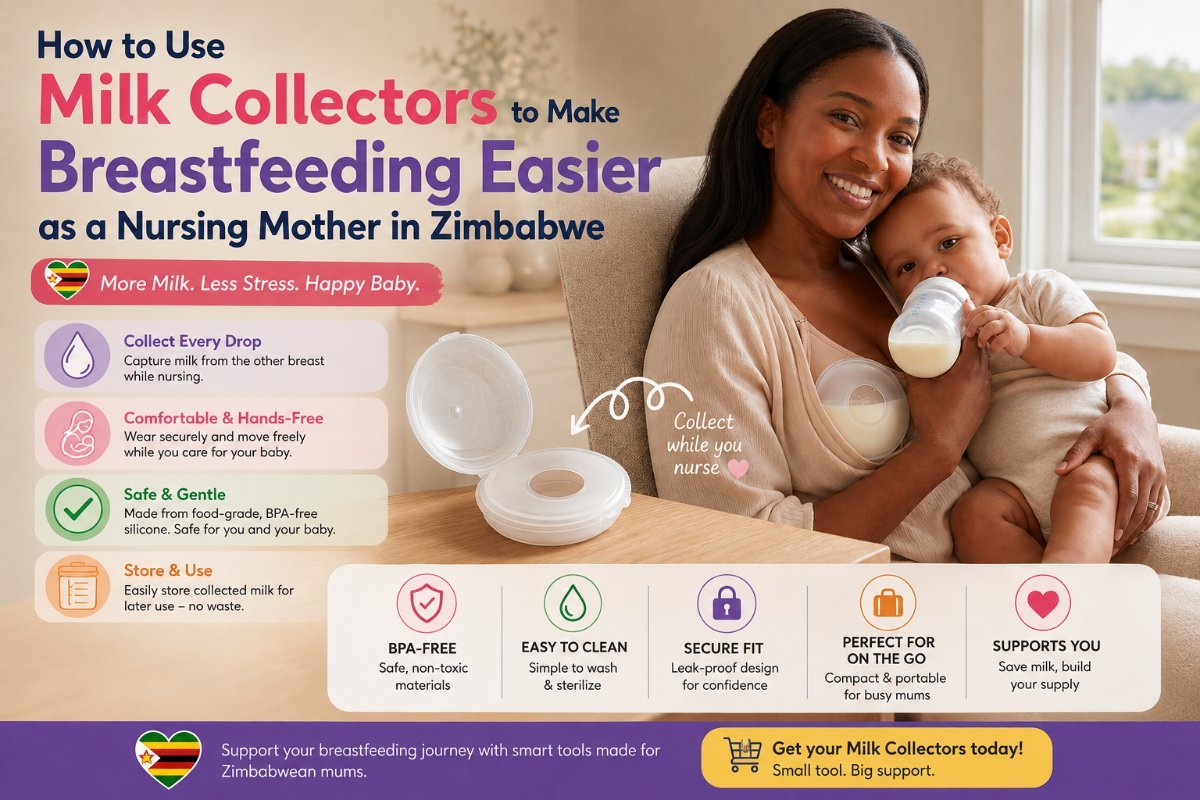
The Leak Nobody Warns You About
If you are breastfeeding, you probably know this moment well: your baby latches on one side, your milk lets down, and the other breast starts leaking — into your bra, through your shirt, and straight into a breast pad where it is wasted. For many mums, that "lost" milk adds up to a surprising amount every day.
Milk collectors (also called milk catchers or breast shells) are designed to catch that milk instead. They have become popular with Zimbabwean mums over the past few years, but are they actually worth it? Here is our honest review, including the downsides that sellers don't always mention.
What Are Milk Collectors?
Milk collectors are small, cup-shaped containers made from soft, food-grade silicone or BPA-free plastic. You place one inside your bra over the breast your baby is not feeding from. When your milk lets down, the extra milk drips into the collector instead of soaking into a pad.
They are not pumps. They don't use suction, batteries or electricity — they simply catch milk that would have leaked anyway. Depending on your supply, many mothers collect anywhere from a few millilitres to 40ml or more per feed.
The Real Benefits
1. You stop wasting milk
This is the main reason to buy them. Every millilitre you catch is milk you can feed to your baby later. Over a week, those small amounts can become several bottles' worth — a real head start if you are building a freezer stash before going back to work.
2. They are completely passive
You don't have to do anything extra. There is no pumping, no noise to wake a sleeping baby, and no need for electricity — useful during ZESA load-shedding, when an electric pump may not be an option.
3. Fewer soaked bras and shirts
Because the milk goes into the collector rather than through your clothes, you will deal with far fewer wet patches during feeds.
4. They protect sore or cracked nipples
Many collectors keep fabric off the nipple, which can give sore or cracked nipples a chance to breathe and heal between feeds.
5. They save money over time
If you are buying disposable breast pads every week, collectors can cut that cost — they are reusable for months with proper care.
The Downsides
- They work best for mums with a good supply. If your supply is low or still settling, you may only collect a few drops.
- They can spill. If you lean forward or lie down, a full collector can tip. Remove it carefully, and choose one with a lid or stopper if you can.
- They need regular cleaning. Milk left sitting in a collector spoils quickly, especially in Zimbabwe's warm weather.
- They are slightly visible under tight clothes when full. Under a loose top or nursing wrap, they are fairly discreet.
- They are not for all-day wear. See the safety note below.
Important: When to Keep the Milk and When to Throw It Away
Milk caught during a feed (when you put the collector on, feed your baby, then remove it) can be stored and used. Milk that has collected while you wear the collector for hours between feeds has been sitting at body temperature and is more likely to grow bacteria — it is safer to throw that away. For storage, transfer collected milk into a clean bottle or storage bag and refrigerate it promptly. Always wash your hands before handling the collector.
Who Are Milk Collectors Best For?
- Mums who leak a lot from the other side while feeding
- Mums planning to return to work who want to build a milk stash with minimal effort
- Mums with oversupply or a strong letdown
- Mums who want a power-free option during load-shedding
They may not be worth it if you rarely leak, have a low supply, or are feeding from both breasts in quick succession.
Milk Collectors vs Breast Pads vs Pumps
Breast pads absorb leaks, but the milk is wasted. Pumps actively draw milk out and are essential if you need to express large amounts or keep up supply while away from your baby. Milk collectors sit in the middle: they don't increase supply or replace a pump, but they rescue milk you would otherwise lose. Many mums use all three at different times.
What to Look For
- Food-grade silicone or BPA-free plastic that can be boiled or sterilised
- A lid or stopper to reduce spills
- Measurement markings so you can track how much you collect
- A low, curved shape that fits comfortably in a nursing bra
- A smooth interior with no hard-to-clean corners
How to Clean Them
Rinse straight after each use, then wash in warm, soapy water with a soft brush. Sterilise regularly by boiling for a few minutes or using sterilising tablets such as Milton. Let them dry completely before storing.
Our Verdict
For most breastfeeding mums who leak during feeds, milk collectors are worth it. They are cheap, simple, reusable and save milk you would otherwise throw away. They won't replace a pump, and they need regular cleaning, but as a low-effort way to save extra milk, they are one of the most useful items you can add to your breastfeeding kit.
You can order Double Milk Collectors on ShopZim for $10, or the 60ml Milk Collectors if you want a larger capacity. For tips on getting the most from them, read our guide to using milk collectors.
This article is for general information only. If you have concerns about your milk supply, speak to your clinic, midwife or a lactation consultant.
